
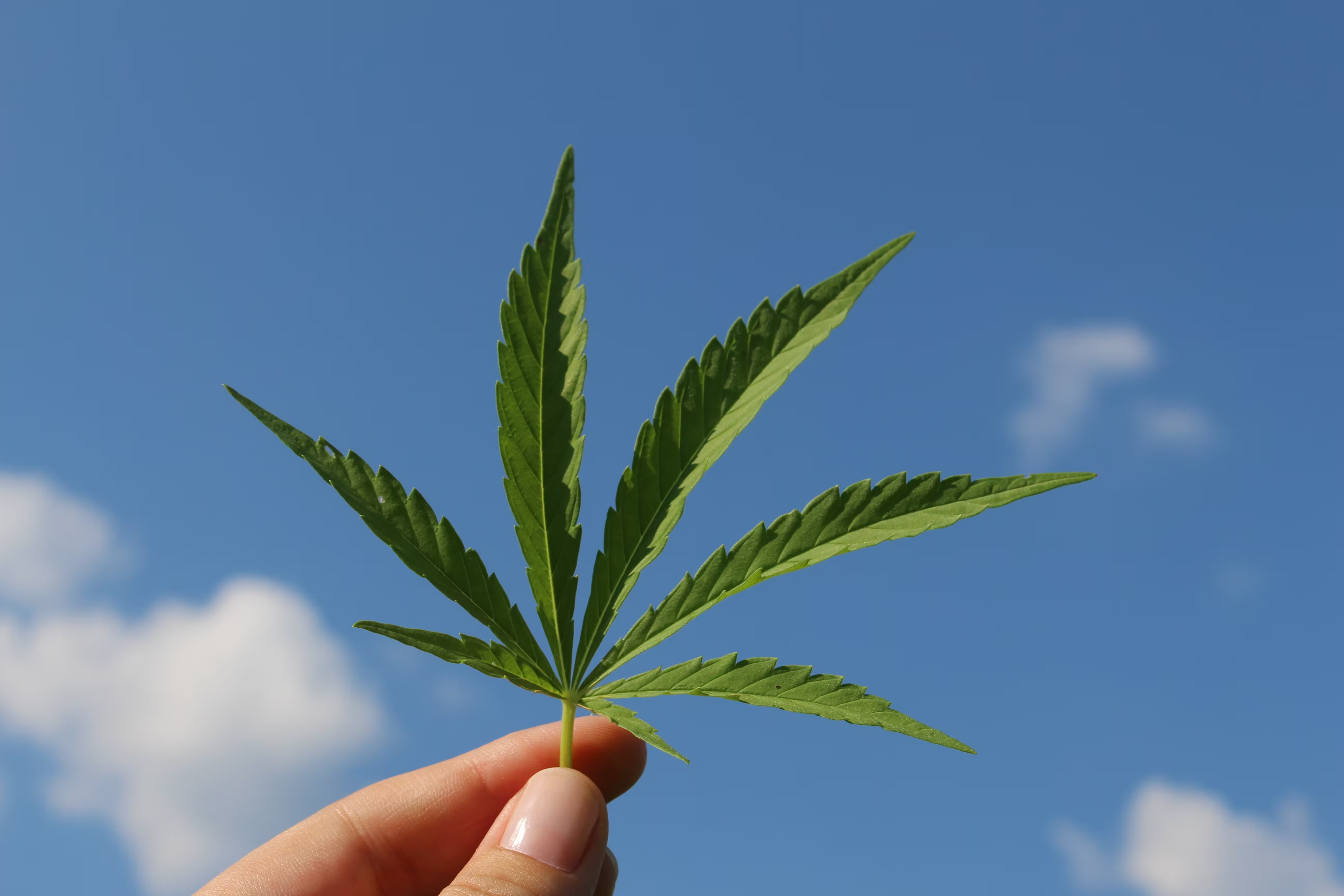
When people talk about cannabis, the conversation often centers on cannabinoids such as THC and CBD. But another group of naturally occurring compounds plays an important role in the plant’s aroma, flavor, and overall chemical profile: terpenes.
Terpenes are aromatic compounds found throughout nature. They are responsible for many of the scents we associate with plants, fruits, herbs, and spices. In cannabis, different combinations of terpenes contribute to the distinctive aromas and flavors of different cultivars.
Terpenes are a large family of organic compounds produced by plants. They are used for a variety of biological functions, including communication and interactions with insects and other organisms.
In cannabis, terpenes are primarily produced in the plant’s trichomes—the tiny, resin-producing structures that are also associated with cannabinoids.
More than one hundred different terpenes have been identified in cannabis, although only a smaller group commonly appears in significant concentrations.
Myrcene is one of the most commonly discussed cannabis terpenes. It has an earthy, musky aroma with herbal and slightly fruity notes.
Myrcene also occurs naturally in plants such as hops, basil, and lemongrass.
As its name suggests, limonene is associated with citrus aromas. It is found in the peels of citrus fruits and contributes a bright, lemony or orange-like character to some cannabis varieties.
Pinene has a distinctive pine-like aroma. It occurs naturally in coniferous trees as well as plants such as rosemary and basil.
There are two major forms, alpha-pinene and beta-pinene, and both can occur in cannabis.
Linalool is known for its floral and lavender-like aroma. It is also found naturally in lavender, coriander, and several other plants.
Beta-caryophyllene has a spicy, peppery character and is found in black pepper, cloves, cinnamon, and other plants.
Interestingly, caryophyllene is chemically unusual among common terpenes because it can interact with the body's endocannabinoid system in ways that distinguish it from many other terpenes.
Terpenes and cannabinoids are different classes of compounds.
Cannabinoids, such as THC and CBD, interact with biological systems in ways that contribute to the characteristic effects of cannabis.
Terpenes are primarily known for their aromatic properties, although researchers are studying their potential biological activity as well.
A cannabis product therefore has a chemical profile that may include dozens of cannabinoids, terpenes, flavonoids, and other compounds—not simply “THC plus CBD.”
If a cannabis product provides laboratory-tested terpene information, look at the compounds listed and their relative concentrations.
For example, a profile might contain:
Myrcene — earthy and herbal
Limonene — citrus-like
Caryophyllene — spicy and peppery
Linalool — floral
Pinene — pine-like
The dominant terpene can provide a useful clue about a product's aroma, but it shouldn't be interpreted as a guaranteed predictor of its effects.
It's also worth remembering that terpene percentages can vary between batches, even when the product has the same name.
Terpenes help explain why cannabis can have such a wide range of aromas and flavors. They also demonstrate why cannabis is chemically more complex than a single number on a product label.
For consumers interested in understanding cannabis, learning about terpenes provides another way to think about the plant: not just in terms of potency, but in terms of its complete chemical profile.
As cannabis research develops, scientists may learn more about how individual terpenes interact with cannabinoids and other compounds. For now, the most reliable way to think about terpenes is as important contributors to cannabis's distinctive chemistry,
particularly its aroma and flavour, while recognizing that many claims about specific terpene-driven effects are still being studied.
Cannabis terpenes are naturally occurring aromatic compounds that contribute significantly to the plant's smell and flavor. Myrcene, limonene, pinene, linalool, and caryophyllene are among the best-known examples.
Rather than assuming that a particular terpene guarantees a particular experience, consider the terpene profile as one piece of the larger cannabis chemistry puzzle. Looking at cannabinoids, terpene composition, product testing, and individual variability together provides a much more accurate picture than focusing on THC percentage alone.
